Feast of Cana
Pastoral Homily Letter for the Feast of Cana
Cherian Jacob
3/10/20265 min read
Pastoral Homily Letter for the Feast of Cana
To be proclaimed in the Churches at the Beginning of the Great Lent
Beloved clergy, monastics, and faithful children of our Holy Syriac Orthodox Church,
Grace, mercy, and peace be with you from God the Father, and from our Lord and Savior Jesus Christ, through the communion of the Holy Spirit.
Beloved Brotheren, As we stand at the threshold of the Great Lent, Holy Church in her divine wisdom places before us the Gospel of the Wedding at Cana. Some may ask: why begin the season of fasting and repentance with a wedding feast? Why does the Church open the door of Lent not with tears, but with wine? Not with the wilderness, but with celebration?
This is not accidental. The Church never reads the Gospel randomly. She reads with memory — the memory of Israel, the memory of covenant history, the memory of salvation unfolding through struggle and fulfillment.
To understand Cana, we must understand that Christianity is born from a Jewish background. Jewish customs, covenant symbolism, and Exodus history are not distant details; they are the soil from which the Gospel grows.
Let us look carefully.
In Jewish tradition, a wedding was never an unplanned gathering. There was betrothal long before the celebration. Invitations were sent well in advance. Attendance was confirmed. Preparations were thorough. The host’s honor was at stake. Wine was not optional — it symbolized joy, blessing, covenant fullness. To run out of wine was not a minor inconvenience; it was a public humiliation.
Now consider: our Lord did not attend alone. He came with His disciples. The presence of a Rabbi with followers elevated the occasion. In that culture, such an arrival resembled a royal visit. It is inconceivable that the host would have treated this casually.
So how then did the wine fail?
If we examine the custom carefully, we must admit: this was not mere oversight. Something deeper was at work.
Let us turn back to Exodus.
After Israel crossed the Red Sea, Moses led the people into the wilderness. They were thirsty. They came to Marah. There was water — but it was bitter. Undrinkable.
In nature, spring water is ordinarily pure. Those who have traveled to mountain springs know that water flows clear and sweet. Water does not become bitter without cause.
Moses faced a crisis. The people were entitled to life-giving water, yet what they found was spoiled. God showed him a remedy: a tree. Moses cast the tree into the waters, and the water became sweet.
Notice the pattern:
There is a community in need.
There is something essential present but corrupted.
There is a leader who intercedes.
There is divine instruction.
There is transformation.
Now come back to Cana.
At the wedding, the people were entitled to joy. Yet joy was missing. The symbol of celebration — wine — had failed.
The Holy Theotokos perceived the deficiency. She did not command the Lord. She did not instruct Him how to act. She simply revealed the need: “They have no wine.”
Some have misinterpreted our Lord’s words in response. They isolate them and use them to diminish the place of the Mother of God. But the Church does not interpret Scripture without context. In the Jewish idiom, His words do not express disrespect. Rather, they indicate that the unfolding of His sign belongs to divine timing — yet He acts.
Like Moses at Marah, a leader stands before a deficiency.
But here, the remedy is not a tree cast into water.
The remedy is Christ Himself.
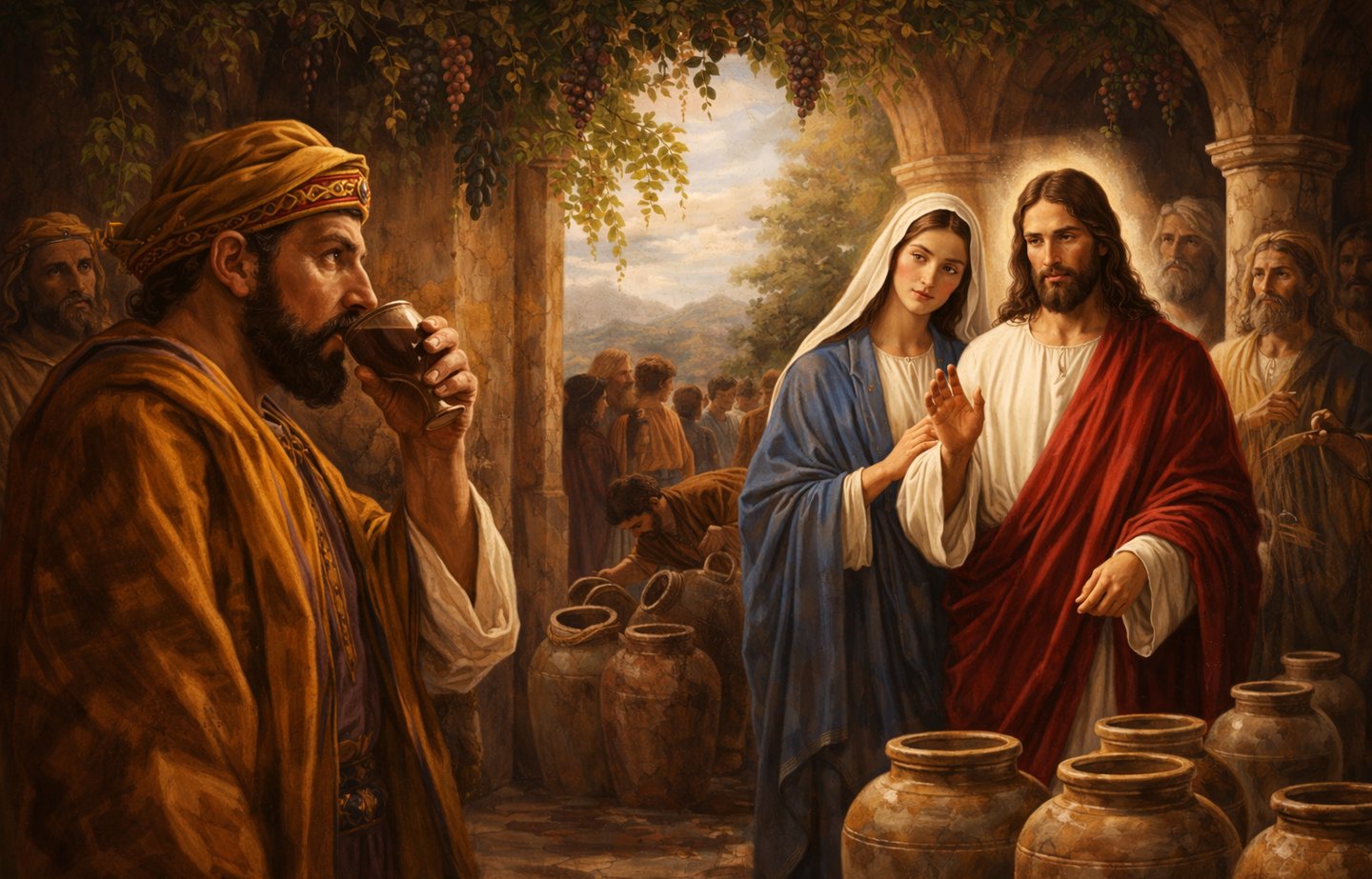
The Gospel carefully notes that the jars were stone vessels used for purification. They were not wine containers. They were for ritual washing — even for washing the feet of guests. They symbolized the old order of external cleansing.
Our Lord commands the servants to fill them with water.
The servants obey. They do not argue. They do not analyze. They do not understand what will happen. They fill the jars.
Then He says, “Draw some out and take it to the master of the feast.”
They carry what they believe is water.
Somewhere between obedience and presentation, the miracle occurs.
The master tastes — and only he perceives that it is wine. Not ordinary wine. The best wine.
At Marah, bitter water became sweet.
At Cana, purification water became covenant wine.
This is no mere hospitality story. It is the inauguration of the new covenant. It is the announcement that the old order of ritual purification is being transformed into the joy of divine life.
Why then does the Church begin Lent here?
Because Lent is not merely about fasting. It is not about external discipline alone. It is not about replacing one set of rules with another.
Lent is about transformation.
Many of us begin Lent with good intentions. We plan. We organize. We schedule prayers and fasts. Yet sometimes we discover — like the wedding host — that something essential is missing. We may have structure, but not joy. We may have form, but not fullness.
Cana teaches us this: bring your empty jars.
The jars were not clean chalices. They were ordinary purification vessels. Yet Christ chose them.
Bring your dryness.
Bring your routine prayers.
Bring your imperfect fasting.
Bring your insufficient love.
Fill the jars. Do what He says.
And somewhere between obedience and offering, He transforms.
The servants did not know they were carrying wine. Often in our spiritual life, we do not perceive the miracle while it is happening. We simply obey.
Only later does the master of the feast — sometimes even the world around us — taste and recognize that something has changed.
Beloved faithful, the connection to Exodus deepens even further. At Marah, the tree sweetened the waters. The Fathers saw in that tree the image of the Cross. At Cana, the transformation anticipates the Last Supper, where wine will become the Blood of the covenant.
Thus, Cana stands between Marah and Golgotha.
The bitter becomes sweet.
The water becomes wine.
The wine becomes Blood.
The Cross becomes life.
And the Mother of God stands at the threshold — at Cana, and later at the Cross.
She does not compete with Christ. She reveals need. She directs obedience: “Whatever He says to you, do it.”
This is her perpetual message to the Church.
As we enter Lent, let us not chase sin as though that were our only task. Let us not reduce Christianity to moral policing. Instead, let us bring our emptiness to Christ.
Let us recognize that our struggles — like Israel’s thirst — have meaning. The wilderness was not wasted time. The deficiency at Cana was not meaningless embarrassment. Both became occasions for revelation.
Perhaps in your life there is bitterness.
Perhaps something essential seems missing.
Perhaps joy has diminished.
Stand before Christ as Moses did.
Stand before Him as the Theotokos did.
And obey as the servants did.
Fill the jars.
The same Lord who sweetened Marah and who transformed water into wine stands in our midst.
May this Lent not be merely a season of restraint, but a season of transformation.
May our fasting become wine.
May our obedience become joy.
May our dryness become sweetness.
And may the Lord who manifested His glory at Cana manifest His glory in our lives.
To Him be glory, with His Father and the Holy Spirit, now and always and unto the ages of ages.
Amen.
Contact
Reach out for spiritual guidance or questions
Email : vicar@stpetersphoenix.org
© 2025. All rights reserved.